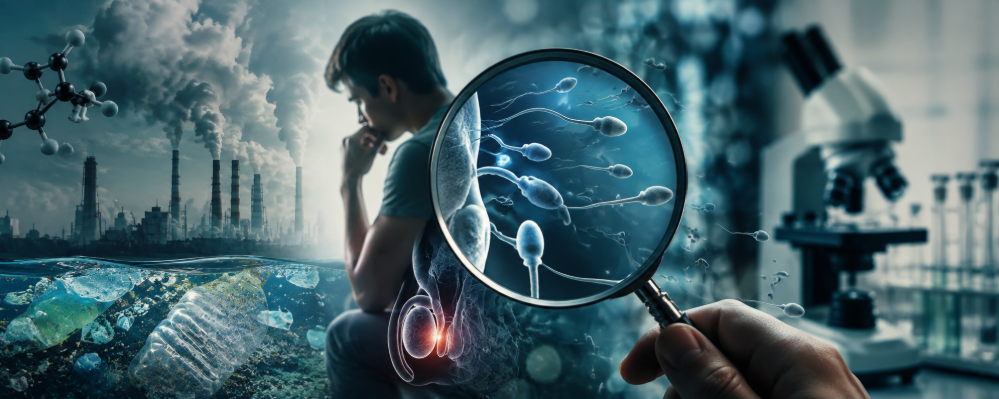
The Fertility Debate Continues: What Else Are We Being Exposed To?
What if Australia’s fertility collapse isn’t one crisis, but the cumulative result of what we eat, drink, inject, regulate and increasingly accept as normal?
My recent series on Australia's fertility collapse started with a fairly simple observation. Australians are having fewer children than ever before, and there is no single reason for it.
We looked at housing, delayed marriage, the cost of raising children, changing attitudes towards motherhood and fatherhood, smaller desired family size, and a culture that seems increasingly organised around individual consumption rather than family formation.
Then we moved into the physical side of the issue: falling sperm counts, testosterone, obesity, endocrine-disrupting chemicals, microplastics and other environmental exposures.
I thought we had covered a lot of ground but Confidential Daily readers had other ideas.
Some of them concern things most of us consume every day without thinking twice. Others involve medical interventions affecting young people. There are questions about vaccines that long predate COVID, and behind several comments sits a much larger suspicion: perhaps governments are not nearly as worried about population decline as they claim to be.
Philip N Howard went straight to something nearly every Australian encounters from the moment they turn on the kitchen tap: Water. Philip believes fluoride deserves far more scrutiny in any discussion about fertility.
"Just add Fluoride. We did, and now we are paying the price."
He also told the story of a young woman he knew who had serious menstrual problems. Philip says he advised her to stop drinking tap water and eating dairy products. After three cycles, he says her menstrual problems resolved, and she later became pregnant. Philip's wider concern about fluoride and reproductive biology does lead into scientific research worth knowing about.
A 2024 review of fluoride toxicity and the male reproductive system examined research published between 1980 and 2024. The authors reported effects involving semen quality, sperm number, spermatogenesis, and the structure of sperm cells under conditions of fluoride toxicity. They also described histological and biochemical changes in the male reproductive system and called for more research into reproductive exposure.
The female side is being investigated as well. A recent study examined gestational fluoride exposure and ovarian function in female offspring, looking at biological pathways through which exposure could affect ovarian development.
Philip is really asking a much broader question. What are the reproductive effects of substances people consume throughout their lives, day after day, year after year?
His concern does not stop at fluoride. He sees drinking water as part of a larger chemical burden, and reader JohnF made much the same point about food. John wrote:
"Today little has changed, apart from statute books of regulation, all manner of legal non-food additives are added for us to eat, albeit small quantities, 6 parts per million here, 9 parts per million there, and collectively we consume a concoction now measurable on a scale far greater than a few parts per million."
That point about cumulative exposure is worth sitting with for a moment. One substance gets assessed at one concentration. Another is examined separately. Packaging has its own rules. Preservatives, colourings, sweeteners, and processing aids all get treated as individual matters. The person eating the finished product doesn't consume them individually. He eats the lot.
Scientific reviews are starting to look more closely at this problem. Research on additives in processed foods has identified substances including phthalates, bisphenol A, some artificial colours, artificial sweeteners, and parabens as possible sources of endocrine disruption, with potential effects on hormone signalling and reproductive function.
Food packaging adds another route of exposure. Reviews have examined phthalates, bisphenols, and PFAS moving from packaging into food, along with the possible reproductive effects of long-term exposure to these compounds and their mixtures.
Researchers looking at food-packaging contaminants and reproductive health have described possible effects on gonadal development, gamete production, and reproductive organs through endocrine disruption, oxidative stress, inflammation, and epigenetic change.
A wider review of human epidemiological research has also reported associations between endocrine-disrupting chemical exposure and semen quality, ovarian reserve, infertility, altered reproductive hormones, and outcomes in assisted reproduction.
John's point is simple enough: Regulation tends to think one chemical at a time. Human beings experience the mixture. We eat it. We drink it. We breathe it. We absorb it through the products around us. We start doing that before birth and keep doing it for decades.
Reader Anneke raised another issue I had not properly explored: medical gender transition and fertility. She wrote:
"I think the transgender agenda is designed to sterilise a cohort of the younger generation, so they can't or will have difficulties reproducing."
The effect of medical transition on fertility is important enough that fertility preservation has become part of the clinical discussion around treatment. A systematic review of fertility preservation for transgender children and young people found that pubertal suppression and gender-affirming hormone treatment can affect fertility. Puberty suppression pauses the development of mature reproductive cells while treatment continues. Cross-sex hormone treatment can impair reproductive function and creates more complicated questions around recovery.
The practical issue is obvious. A boy who starts puberty suppression before producing mature sperm cannot simply freeze sperm first. For prepubertal children, fertility-preservation options involving reproductive tissue are still developing and remain technically difficult.
Research examining testicular tissue from transgender women who had undergone puberty suppression and hormone treatment gives some idea of what can happen to reproductive development. Mature sperm were found in only a small proportion of the people studied, all of whom had started medical treatment later in puberty. The researchers stated that treatment involving puberty suppression, hormones and later removal of the testes impairs reproductive function.
For a young person considering these treatments, fertility is a very practical question. Will I want children when I'm 30? Plenty of adults cannot answer that confidently. Asking a 13 or 14-year-old to know what they will want decades later is another matter entirely.
A teenager may desperately want treatment today and feel very differently about parenthood fifteen years from now. Biology has its own timetable, whether politics likes it or not. This matters because reproductive decisions are increasingly being made earlier while parenthood itself keeps getting pushed later.
We tell young people they do not need to think seriously about having children until their thirties. At the same time, some are making medical decisions affecting their reproductive system during adolescence. That deserves far more public attention.
Reader Graham H Lyons raised another medical question I had not examined: the HPV vaccine. Graham pointed to reports of primary ovarian insufficiency following HPV vaccination and to a US study reporting lower childbirth rates among vaccinated women.
Published in 2018, that study examined American women aged 25 to 29 and reported a lower probability of having ever been pregnant among women who said they had received an HPV vaccine.
There has also been enough scientific interest in reports of primary ovarian insufficiency following HPV vaccination for researchers to conduct large population studies looking at the issue.
Other researchers have approached the fertility question differently, by measuring how quickly couples conceive. A North American prospective study followed thousands of women trying to become pregnant, along with more than a thousand male partners, and examined HPV vaccination in relation to fecundability, which is simply the chance of conceiving during a menstrual cycle. The study concluded with somewhat mixed results.
That illustrates why reproductive health needs to be followed over long periods. A vaccine given during adolescence may be assessed mainly for immediate safety and its ability to prevent infection. Fertility may not become relevant to the recipient until ten or twenty years later.
Graham's comment also points to a larger problem with the way medicine thinks about fertility. For years, it was often treated as something to worry about once a couple arrived at an IVF clinic. By then, most of the exposures that may matter have already happened. Childhood diet is done. Puberty is done. Medication has been taken. Chemical exposure has accumulated. Relationships, stress and sexual history have already played their part. Perhaps reproductive health needs to be protected across a lifetime rather than patched up when someone reaches 37 and discovers conception is no longer straightforward.
Then we get to the biggest and most controversial idea readers raised. Several believe declining fertility is not merely an unfortunate accident. Old Man Willy put it this way:
"I could be wrong here, I'm a farmer not a researcher or educated person, but it seems to me that some powerful and influential people have the view that there's too many people, and they've been doing things quietly for decades to remedy that issue according to their wishes."
Robin Percy came to a similar conclusion after reading Dr Robert Yoho's arguments about population reduction. Anneke was more direct:
"I do think the depopulation agenda is real, manifesting via the various ways."
Part of what prompted her comment was a paper she had seen in the journal Sustainable Development discussing a gradual reduction in the world's population towards four billion by 2200 as a path towards environmental sustainability.
That paper's authors argue that a smaller global population could reduce pressure on habitats, emissions, and resources. The proposed route is lower fertility over generations rather than some sudden reduction in the number of people already alive.
Depopulation has been promoted by the globalist elite for decades in connection with climate change, resource use, biodiversity, poverty, and economic development. Contraception, abortion, and even sterilisation have repeatedly been promoted by globalist outfits internationally because they lower fertility.
Environmental arguments also continue to link population size with emissions and resource consumption. The proposition that fewer humans can mean less pressure on the natural world is now quite openly discussed.
So when readers hear governments warning about collapsing fertility while supporting international institutions and environmental movements that have spent decades talking about population reduction, they notice the contradiction. It's not hard to see why.
Australia says it needs more people. We are told an ageing population requires more workers and more taxpayers. Governments use mass immigration to keep population growth moving. At the same time, Western culture has spent decades warning about overpopulation, celebrating smaller families, and increasingly describing human activity itself as an environmental burden. Eventually, those messages run into one another.
Anneke asks why, if governments are genuinely alarmed about fertility, their preferred response so often seems to be immigration rather than rebuilding the conditions that allow their own citizens to form families. That is a fair question for Canberra. Kevin made the point in fewer words:
"It's easier to import more migrants."
Of course it is. Fixing fertility means dealing with housing, relationships, reproductive health, family culture, chemical exposure, confidence in the future and medical practices most politicians would rather leave alone. Changing the migration intake requires a minister and a spreadsheet.
The reader discussion also exposed something else that bothers me. Government departments and institutions like their problems separated into neat little boxes. Water quality sits in one box. Food regulation in another. Gender medicine is handled somewhere else. Vaccination belongs to another group again. Housing is shunted off to Treasury, state planning departments and councils. Demographers deal with fertility. Immigration officials deal with population. Nobody actually lives like that.
The same person drinks the water, eats the food, takes the medicine, breathes the pollution, pays the mortgage, chooses a partner, and eventually decides whether to have a child. That is why these reader responses have been so useful. They are looking at fertility from ground level instead of through the window of a government department.
Philip asks what is in the water. John asks what is in the food. Anneke asks what medical interventions may mean for the reproductive future of young people. Graham asks whether we follow reproductive outcomes long enough after childhood vaccination. Others ask an even more uncomfortable question: whether institutions that spent decades worrying about too many humans are really all that distressed when fewer humans are born. They are different questions, and they do not need to arrive at the same answer.
Australia's fertility collapse was never going to have one culprit. The whole point of this exercise has been to understand how a wealthy, peaceful country with every material advantage reached the stage where each generation is producing far too few children to replace itself. And the more you look around, the more you notice how much has changed.
Our food has changed. Our water has changed. Our chemical environment has changed. Medicine has changed. Childhood has changed. Relationships have changed. The age at which people have children has changed.
And somewhere along the way, Australians stopped having enough babies. We should probably keep asking why.
Thought for the Day
“It is error only, and not truth, that shrinks from inquiry.” ― Thomas Paine
I’m a journalist, former politician, Christian, and campaign director for CitizenGO Australia. My mission is to challenge the media lies, government overreach, and corporate censorship that threaten our freedoms.
Helen Haines deserves compassion and justice. Australians deserve an honest examination of political hostility, including the kind directed at conservatives.